Home / Courses / Crisis Prevention & Verbal De-Escalation in Senior Living
EMBR-WGN-CPD Workforce Development Training | Senior Living & Memory Care

Crisis Prevention & Verbal De-Escalation in Senior Living

A competency-based certificate for every role in assisted living, memory care, and senior living communities where escalation is part of daily work.

20 Hours
24 Modules
5 Phases
$3,000/participant
Download Overview
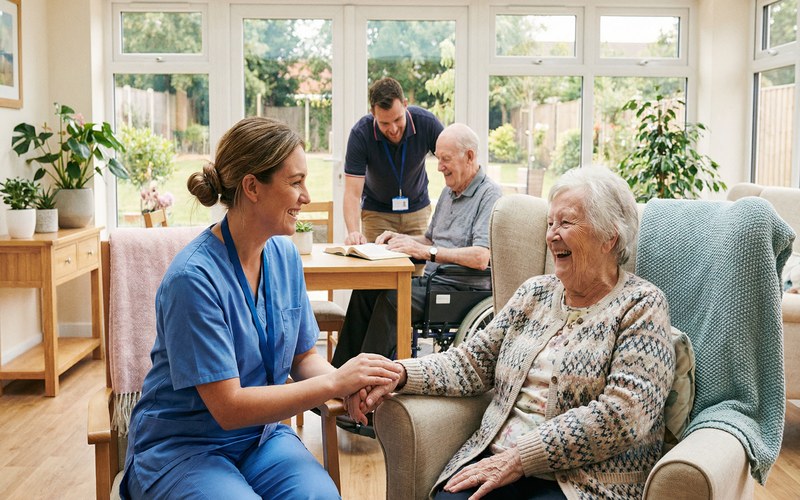
A dining team member kneels beside an older resident's chair in a senior living dining room, speaking calmly at eye level while the resident listens

"Behavioral incidents happen at the frontline every day, yet formal de-escalation training for every role is still rare."

Who This Program Is For

Full-time, permanent employees at least six months into their position, in every department where behavioral escalation is part of routine operations:

  • Care Associate, CNA, or Nurse responding to behavioral escalation and memory care crises
  • Dining Associate handling mealtime escalation and disruptive incidents
  • Housekeeping or Maintenance team member responding to resident escalation during service
  • Activities or Recreation team member managing group dynamics and individual escalation
  • Front Desk or Administrative team member handling visitor and family escalation
  • Supervisors and Leads coordinating response to multi-person incidents
  • Licensed Nurses and Care Coordinators documenting incidents and escalation protocols

Learning Objectives

  • Explain what drives resident behavior and decide when to call for clinical support versus step back and de-escalate
  • Spot the earliest signs of escalation and break a power struggle before it forms
  • Use specific language, body posture, and sequenced techniques to de-escalate residents, family members, and peers
  • Recognize how trauma histories, family dynamics, and ethical pressure shape the hardest conversations, and respond with judgment
  • Close the loop with residents, families, and team members after an incident
  • Document incidents accurately in factual language that holds up to state survey
  • Lead or take part in a structured team debrief that supports recovery and prevents the next crisis
  • Recognize compassion fatigue before it becomes burnout and build a team culture that keeps good people
  • Scope, run, and present a real de-escalation improvement project in your own community

Curriculum Overview

24 modules: a short orientation, 5 phases, and a capstone project, delivered over 20 hours.

1

Before the Crisis: What Every Person in This Building Needs to Know

The foundational knowledge every person in a senior living community needs before a hard moment arrives: what drives resident behavior, and when to call for clinical support versus step back and de-escalate. Every role, from property management and front desk to dining, housekeeping, maintenance, and care, leaves with first-response confidence.

2

Words That Work: Verbal De-Escalation for Every Situation

The practical toolkit every employee needs regardless of role: spotting the earliest signs of escalation, breaking a power struggle before it forms, and the specific language, body posture, and sequenced techniques that de-escalate residents, family members, and difficult moments before they become incidents.

3

The Harder Conversations: Trauma, Family & Ethics in Senior Living

The situations that ask the most of us: moments shaped by trauma histories, family dynamics, ethical pressure, and the emotional weight carried into every room. Self-awareness, communication judgment, and human understanding that hold up in the hardest interactions.

4

After the Storm: Closing the Loop & Stopping It From Happening Again

What happens after the hard moment, and why it matters as much as what happened during it. Closing the loop with residents, families, and team members, documenting accurately, debriefing with the team, and building habits that prevent the next crisis.

5

Take Care of Yourself: Resilience, Purpose & Growing as a Professional

Support for the people doing this work: recognizing compassion fatigue before it becomes burnout, holding on to purpose through hard days, building a team culture that retains good people, and putting the full program into applied practice.

Capstone Project

Each learner chooses a real project, finds a mentor, delivers results, and presents to the leadership team. The capstone is completed on site during the OJT hours.

Delivery Format

Total Hours
20 Hours

4 hrs online + 16 hrs customized on-the-job training

OJT Location
On-Site

Completed at the employer's community, customized to the trainee's department and role

Certificate
Upon Completion

Issued upon passing a final competency assessment

Eligible Departments
All Departments

Care/wellness, dining, housekeeping, maintenance, activities, front desk, nursing, supervision

Ready to Get Started?

Reach out to discuss enrollment, group pricing, or to schedule a live demo.

© 2025 An Embrace of Learning. All rights reserved.